Travid
An iOS app that traces contacts and slows the spread of COVID-19 by linking citizens and facilities through a personal QR code.
Team project
The problem
As COVID-19 spread to more than 210 countries, some people kept going out and gathering as usual, and it was hard to know which places an infected person had visited and who they had been near.
The solution
An iOS app that gives each citizen a personal QR code to scan when entering any facility, building a visit record so places and contacts can be alerted quickly when an infection is reported.
How it works
Travid was built at the CodeTheCurve hackathon under the "social and health issues" theme, by a team of four.
The idea
The app links with health and security authorities. Every citizen registers with their national ID and gets a QR code to scan when entering any facility. When someone tests positive, the places they visited and people nearby are alerted, so contacts are reached faster.
Validating the idea
Before building, the team designed an MVP and a Google Forms survey shared on social media. The idea was accepted by 70% of respondents.
How it was built
- Language and IDE: Swift and Xcode for iOS
- Database: Firebase Realtime Database for real-time sync
- Chatbot: IBM Watson Assistant
- Project management: a timeline from April 20 to 29, 2020, with meetings on Webex and coordination on Slack
What I learned
Building an iOS app in Swift, designing a real-time database on Firebase, and building a chatbot with IBM Watson Assistant.
Key features
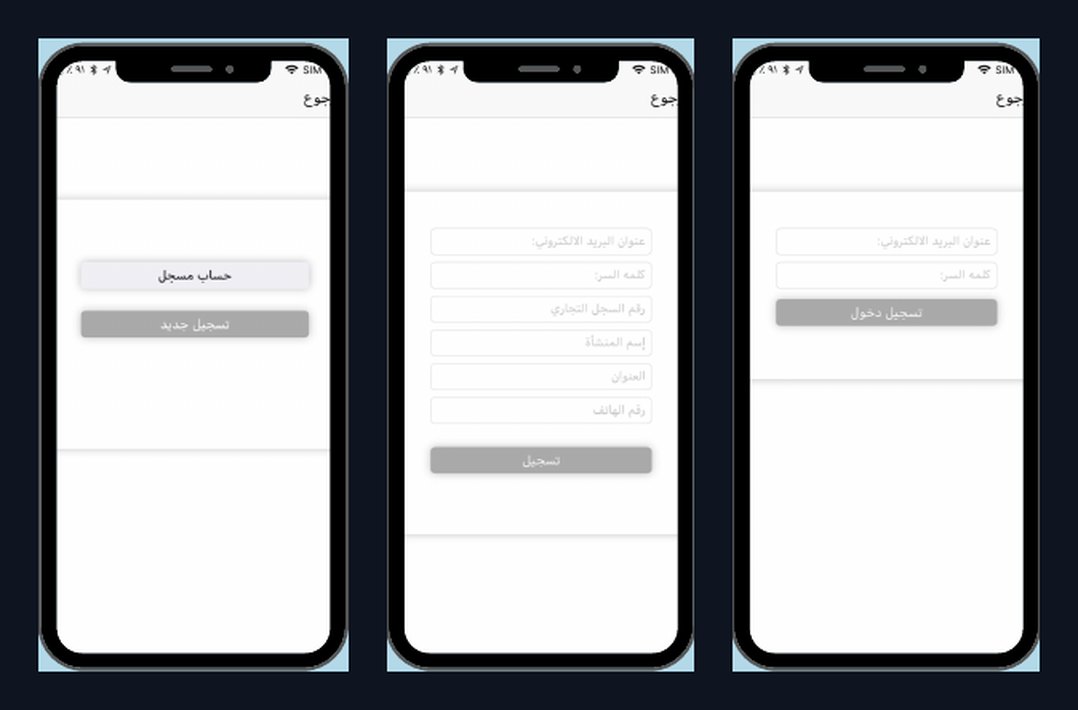
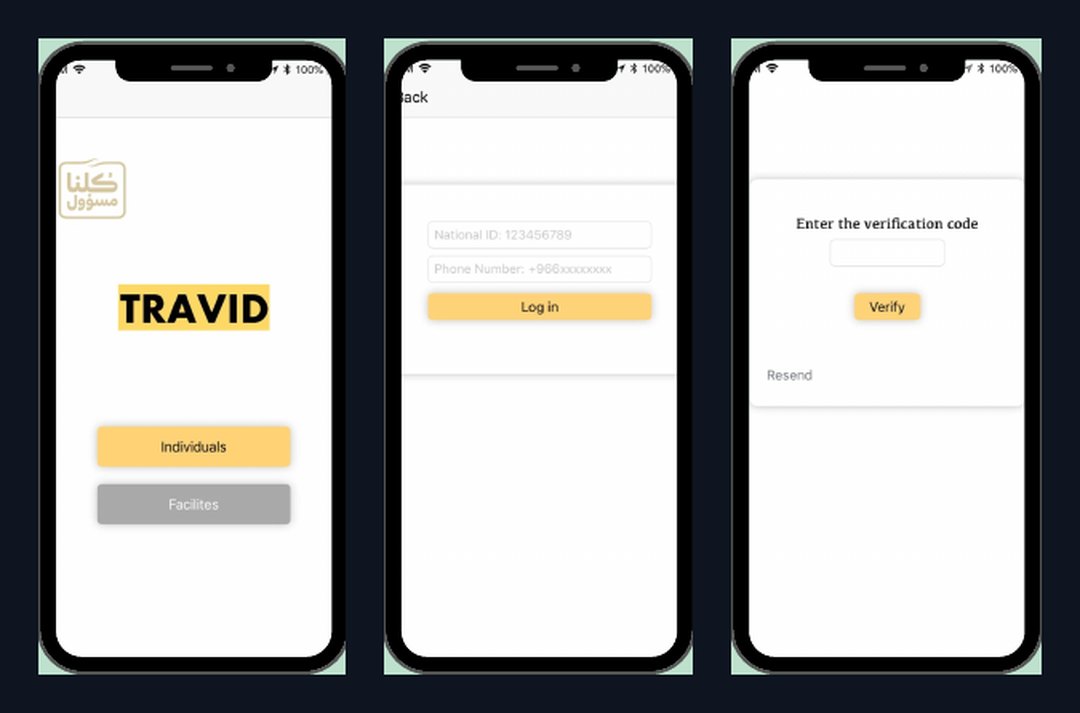
- Two user types: individuals and facilities
- Individual sign-in with national ID and phone, plus a verification code
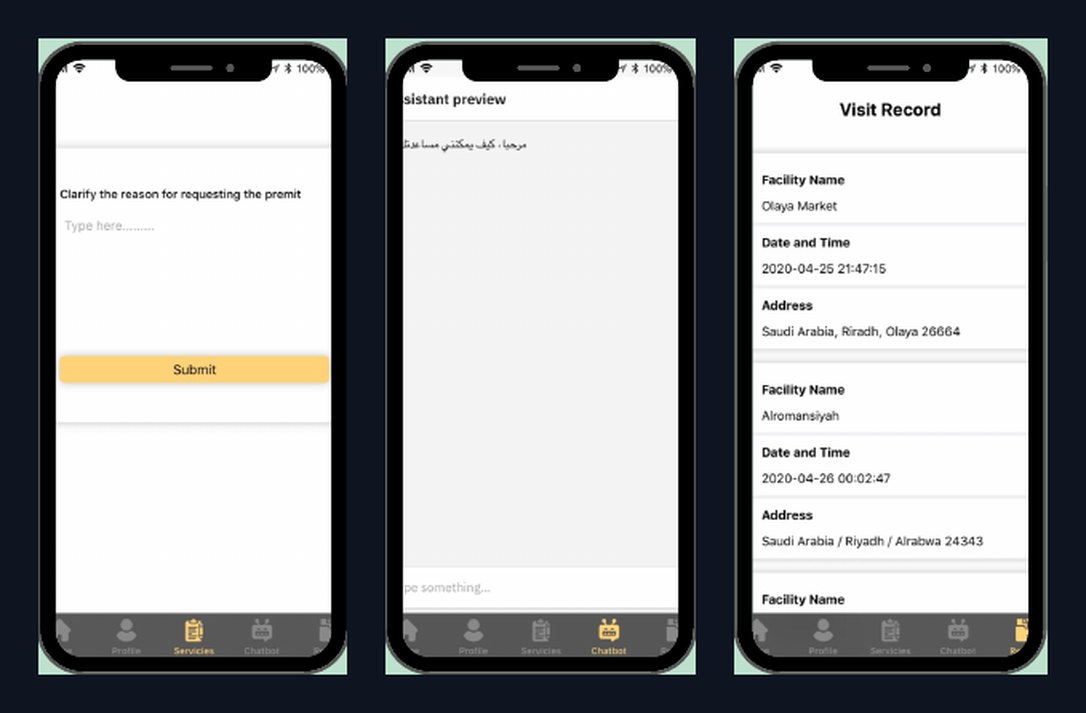
- A personal QR code scanned at shops to record each visit
- A visit record showing facility, date, time, and address
- Alerts to places and nearby people when an infection is reported
- A social-distancing alert when more than 5 people gather
- Requests for permission to go out during curfew hours
- A chatbot built on IBM Watson Assistant
Screenshots